Click any project card below to view the full README documentation and video walkthrough:
Pseudomonas oprD Gene & Resistance Profiling
Bioinformatics / Python
An automated bioinformatics pipeline designed to analyze genetic divergence and antimicrobial resistance markers in Pseudomonas aeruginosa strains.
Biological Context:
Targets the oprD gene encoding the outer-membrane porin channel OprD, a major entry port for carbapenem antibiotics. Mutations or identity drops lead to clinical multidrug resistance.
p53 & PRIMA-1 Molecular Docking Pipeline
Structural Biology
A virtual screening and structural bioinformatics workflow investigating ligand-protein binding interactions to evaluate pharmacological restoration of mutant p53 proteins.
Biological Context:
Mutations in the tumor suppressor protein p53 are prevalent in human cancers. PRIMA-1 acts as a small molecule capable of reactivating mutant p53 conformations.
GSE52778 RNA-Seq Differential Expression Pipeline
Transcriptomics / Python
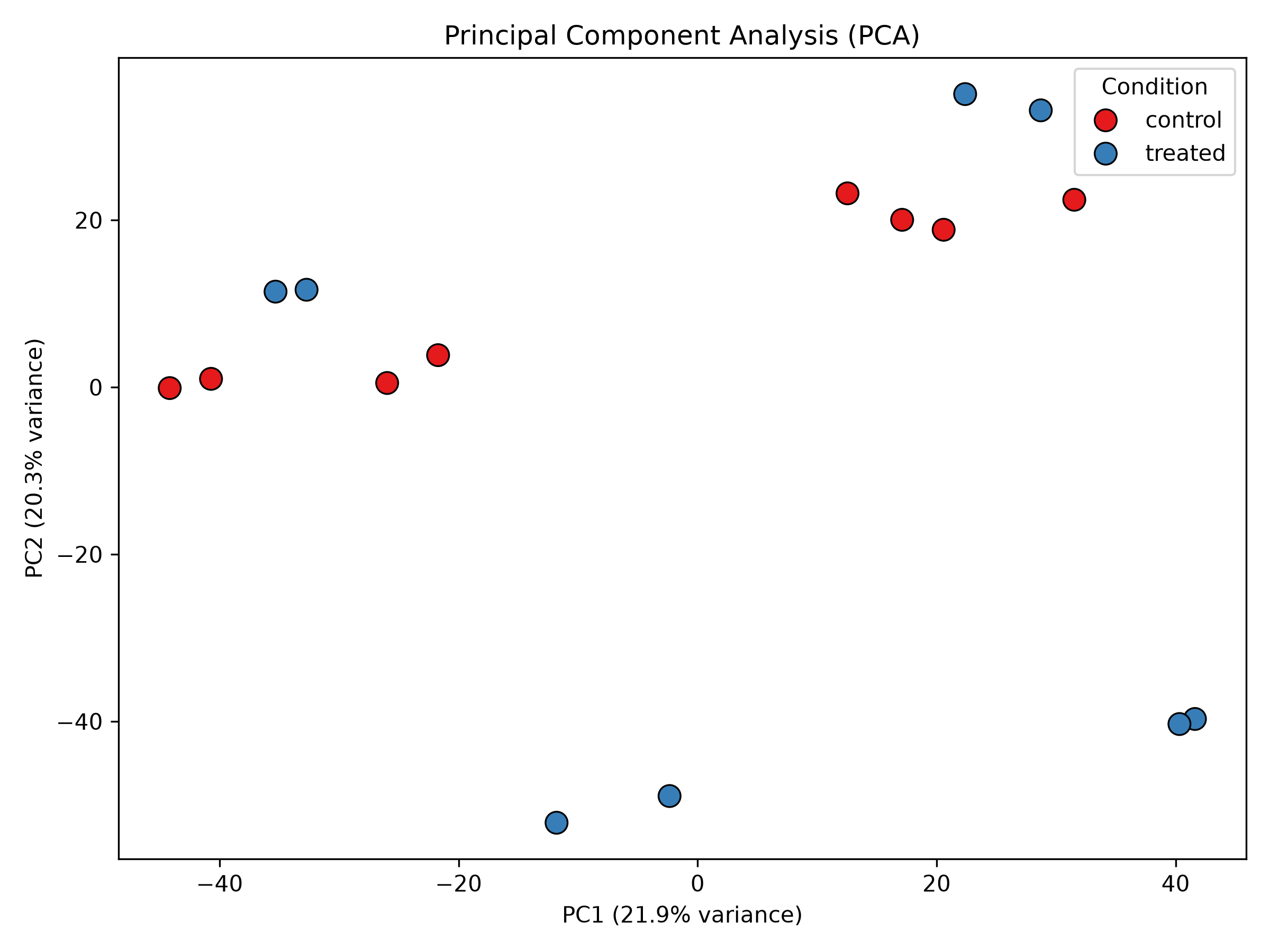
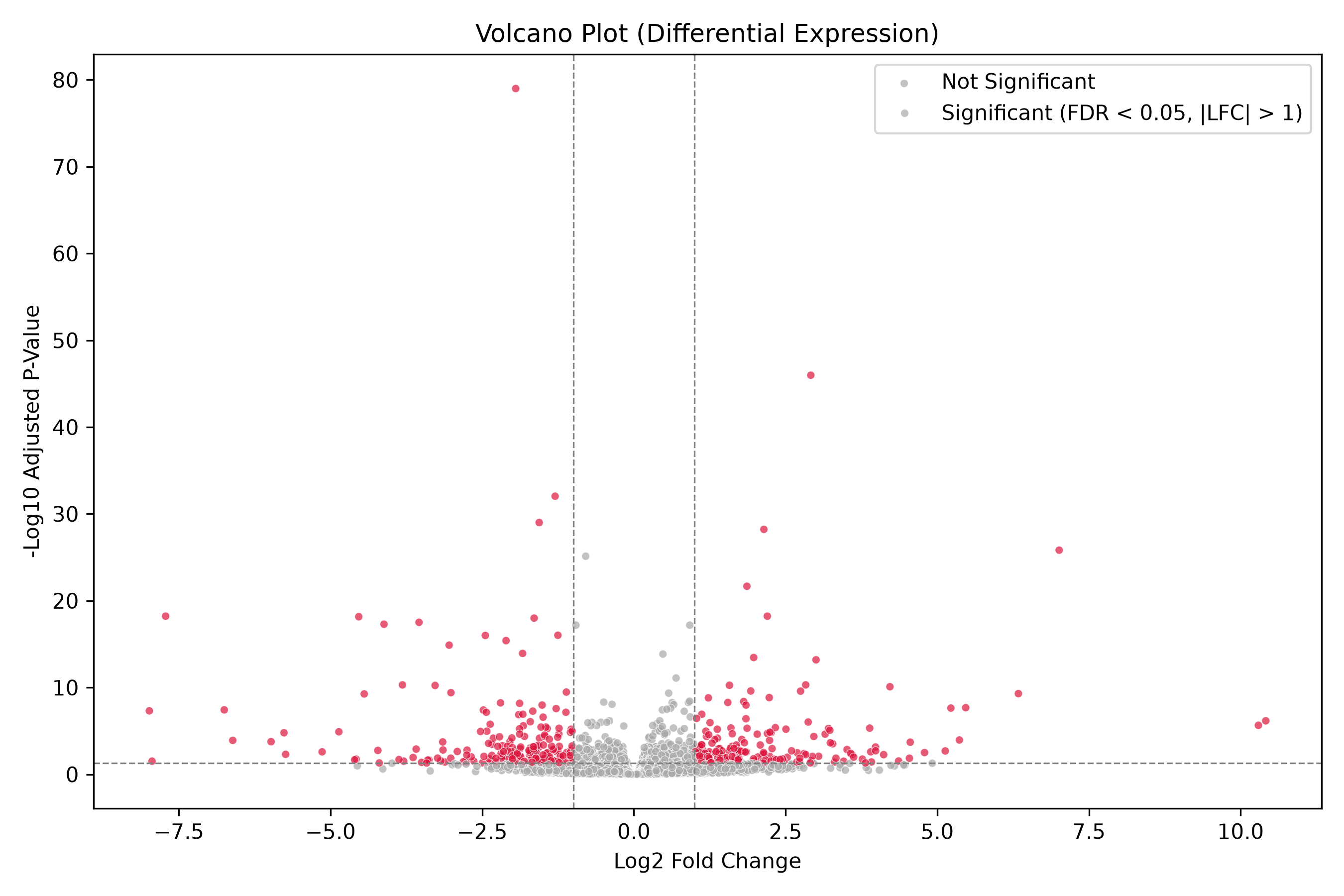
A reproducible, automated Python pipeline for end-to-end transcriptomic analysis analyzing glucocorticoid responses in human airway smooth muscle cells using PyDESeq2.
Biological Context:
Processes raw RNA-Seq count data from NCBI GEO (Dataset: GSE52778), fits a generalized linear model for differential gene expression, and maps sample variance.
Practical Lab Skill Assessments
Verified competencies and ongoing training records
Good Laboratory Practice (100%)
Appropriate use of PPEVerified (1/1)
Organisation of bench area and experimentsVerified (1/1)
Clearing and disinfecting bench areasVerified (1/1)
General Laboratory Techniques (100%)
Aseptic techniqueVerified (1/1)
Use of the light microscopeVerified (1/1)
Use of spectrophotometersIncomplete (-/1)
Use of automatic pipettesVerified (1/1)
Use of a laboratory balanceIncomplete (-/1)
Use of centrifuges and microfugesIncomplete (-/1)
Serial dilutionIncomplete (-/1)
Use of a pH meterIncomplete (-/1)
Subject-Specific Laboratory Skills (100%)
Bacterial sub-cultureVerified (1/1)
StainingVerified (1/1)
Setting up PCR reactionsIncomplete (-/1)
Performing gel electrophoresisIncomplete (-/1)
Pseudomonas oprD Gene & Resistance Profiling
Full Project README & Video Walkthrough
In Silico Profiling of Resistance and Virulence Markers in Pseudomonas aeruginosa
This project investigates the genetic divergence of key resistance and outer-membrane porin genes (such as oprD) across different strains of Pseudomonas aeruginosa. By leveraging programmatic sequence alignment tools in Python, this workflow automates the detection of Single Nucleotide Polymorphisms (SNPs) and calculates percentage identity matrices between reference and clinical isolates.
Objectives
Automate Data Retrieval: Curate and manage FASTA-formatted nucleotide sequences from NCBI GenBank.
Sequence Alignment: Implement global pairwise sequence alignments using Biopython.
Variant Analysis: Quantify sequence identity scores and map divergence to understand potential mechanisms of antimicrobial resistance.
Methodology
Data Collection: Retrieved full-length coding sequences for target resistance-associated loci from *Pseudomonas aeruginosa* PAO1 (reference) and select variant strains via NCBI.
Computational Pipeline: Developed a Python-based analysis script utilizing the Biopython library (`Bio.Align`).
Scoring Matrix: Executed global Needleman-Wunsch alignments with optimized gap penalties to evaluate sequence conservation and highlight structural mutation hotspots.
Tech Stack & Tools
Language: Python 3.x
Libraries: Biopython, Pandas, Matplotlib
Databases: NCBI Nucleotide / GenBank
Results & Findings
Successfully established an automated pipeline capable of parsing multi-FASTA files and outputting comparative alignment identity metrics.
Identified regional sequence variations that correlate with known porin-mediated resistance profiles in clinical variants.
Future Extensions
Integrating structural modeling (AlphaFold/PyMOL) to visualize how identified SNP substitutions impact extracellular loops of the target membrane proteins.
Step-by-Step Replication Guide
Step 1: Create the Project Structure and Dependencies
Open your repository in GitHub Codespaces or your local terminal. Create a file named `requirements.txt` and add package dependencies:
biopython
pandas
Install dependencies via terminal:
pip install -r requirements.txt
Step 2: Create the FASTA Data File
Create a folder named `data/`. Inside, create `oprD_sequences.fasta` with your reference and variant protein sequences.
Step 3: Create the Python Analysis Script
In the root directory, create `analyze_resistance.py` and implement the sequence parsing, alignment, and CSV export logic.
Step 4: Execute the Pipeline
python analyze_resistance.py
Verify that the script generates the `alignment_results.csv` output summary file.
Welcome! My name is Ali Al-Jumaili and I am an undergraduate Biomedical Science student at the University of Surrey. This repository showcases my independent exploration into bioinformatics and structural biology, specifically focusing on molecular docking simulations.
Rather than relying purely on complex terminal-based scripting, this project demonstrates a streamlined, user-friendly virtual screening workflow using PyRx (AutoDock Vina GUI). Here, I investigate ligand-protein binding interactions—such as docking PRIMA-1 against target receptors like 1TUP—to analyze binding affinities and structural conformations efficiently.
Load Molecules: Open PyRx and navigate to the AutoDock tab. Click Add Ligand to import your prepared ligand file (.pdbqt). Click Add Macromolecule to import your target protein receptor file (.pdbqt, e.g., 1TUP).
Select Molecules for Docking: Go to the Select Molecules panel. Check the boxes next to your target ligand and macromolecule in the Navigator tree. Click Forward to proceed to the Vina Wizard search space setup.
Define the Search Space (Grid Box): Adjust the grid box dimensions and center coordinates in the 3D viewer to cover the active binding site of your protein. Click Forward to execute the AutoDock Vina docking calculation.
Analyze & Export Results: Once the progress bar completes, view the Binding Affinity (kcal/mol) table in the results panel. Export your binding affinity scores and download your docked conformations (.sdf or .pdb) into your data/processed/ directory.
A reproducible, automated Python pipeline for end-to-end transcriptomic analysis using PyDESeq2 and scikit-learn. This workflow processes raw RNA-Seq count data from NCBI GEO (Dataset: GSE52778), fits a generalized linear model for differential gene expression, and generates publication-grade Quality Control (PCA) and result (Volcano) visualizations.
Project Structure
geo-rnaseq-pipeline/
├── data/                    # Raw count matrices and auto-generated metadata
│   ├── metadata.csv         # Experimental design matrix
│   └── ...                  # Raw count files (.csv, .tsv, .txt)
├── pipeline.py              # Main automated execution script
└── README.md                # Project documentation
Requirements & Dependencies
This pipeline requires Python 3.10+ and the following core libraries: